

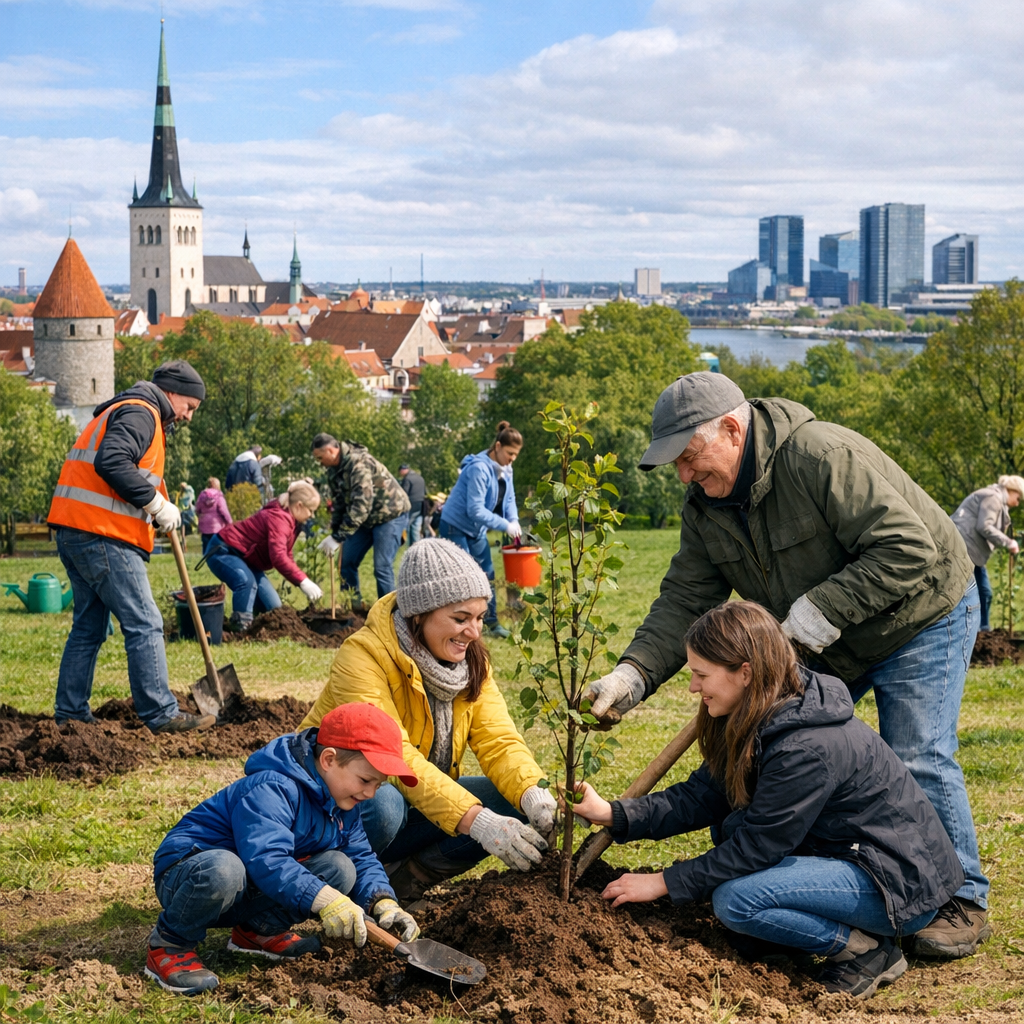
As Tallinn strives to achieve climate neutrality by 2050, the city’s approach emphasizes community involvement and sustainable urban development. This commitment is evident in various initiatives that engage residents and promote environmental stewardship.
Community-Driven Environmental Initiatives
In 2025, Tallinn’s Citizens’ Assembly brought together 50 residents from diverse backgrounds to propose solutions for connecting the city’s green areas and enhancing climate resilience. This collaboration resulted in 61 initiatives aimed at creating a greener, more people-centric urban environment. To date, 20 of these initiatives have been completed, 28 are underway, and 13 are in the planning stages. Notable achievements include the adoption of nature-friendly mowing practices, expansion of meadow restoration areas, and the establishment of community gardens that have become popular among local gardening enthusiasts. [Source]
Advancements in Circular Economy
The Tallinn Circular Economy Center plays a pivotal role in managing waste stations and developing modern circularity centers across the city. Key activities include waste collection and management, operating repair workshops, and promoting sustainable practices. The recently opened Lilleküla Circularity Centre offers maker spaces for sewing and upholstery, a dedicated reuse room, and a 24/7 bike repair station, alongside improved waste collection services. Plans are also underway to develop large-scale circularity centers in Lasnamäe and Haabersti, further enhancing the city’s commitment to sustainability. [Source]
Urban Gardening and Environmental Education
Recognizing the importance of environmental awareness, Tallinn continues to support projects that enhance residents’ understanding and improve gardening opportunities. In 2024, the city allocated €300,000 to fund urban gardening and environmental education projects, aiming to increase urban biodiversity through citizen initiatives. Currently, there are nearly 190 urban gardens across every district in Tallinn, including 33 community gardens and about 160 educational gardens, reflecting the growing interest in urban gardening among residents. [Source]
Addressing Climate Change Impacts
Climate data indicates a significant warming trend in Tallinn, with a mean temperature increase of 2.44°C over the past century. This rise poses challenges such as increased risks of heatwaves and droughts. In response, Tallinn is participating in international projects to develop effective adaptation measures. For instance, the Väike-Õismäe area serves as a pilot site for testing heatwave mitigation strategies, with plans to implement successful solutions in other districts like Mustamäe and Lasnamäe. [Source] [Source]
Collaborative Efforts for a Sustainable Future
Tallinn’s journey toward climate neutrality is a collaborative endeavor that involves residents, local authorities, and various organizations. By fostering community engagement and implementing sustainable practices, the city aims to create a resilient and environmentally friendly urban environment for future generations.