

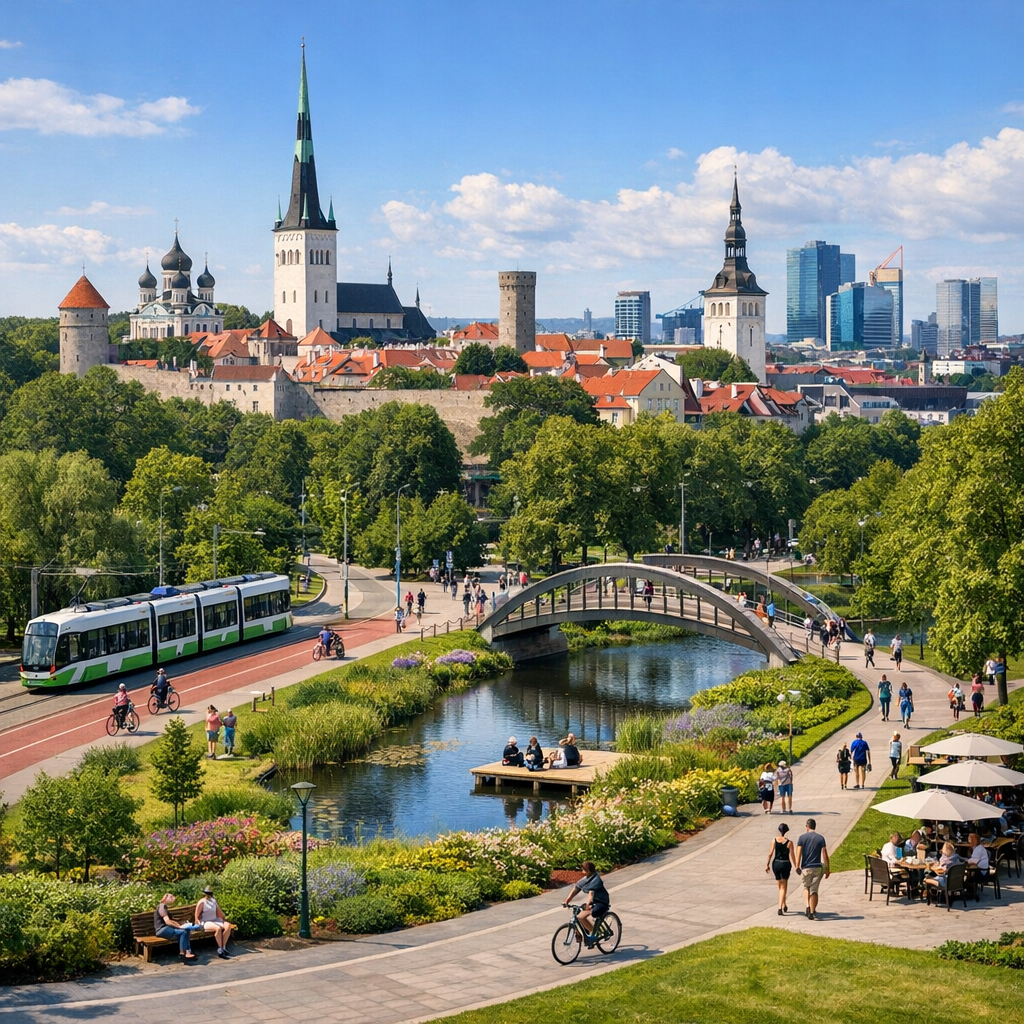
Tallinn is actively pursuing initiatives to enhance environmental sustainability and urban accessibility, aiming to improve the quality of life for its residents.
Environmental Sustainability Efforts
In a significant move, Tallinn has become the first European capital to ban the use of polyvinyl chloride (PVC) advertising materials in public spaces. This decision reflects the city’s commitment to protecting residents’ health and the environment, steering public visual communication toward more sustainable practices. Deputy Mayor Margot Roose emphasized the importance of reducing toxic materials in landfills and prioritizing environmental protection and public well-being.
Additionally, the city has developed an action plan to reduce environmental noise in public spaces. With around 10% of the population affected by persistent traffic noise, the plan focuses on mitigating noise levels exceeding set limits to ensure a healthy living environment. Measures include promoting sustainable mobility solutions, such as improved infrastructure for public transport, cycling, and walking, as well as reducing vehicle speed limits to 30–40 km/h.
Enhancing Urban Accessibility
To address accessibility challenges, city leaders participated in an accessibility walk to experience firsthand the obstacles faced by individuals using wheelchairs or strollers. The walk highlighted areas needing improvement, such as the pedestrian tunnel at Freedom Square and access routes to the Victory Column of the War of Independence. Deputy Mayor Karl Sander Kase stressed the importance of ensuring that all public infrastructure is genuinely usable by everyone, starting with increased awareness and proactive planning.
Furthermore, the city has signed a goodwill agreement with Old Town entertainment venues to balance vibrant nightlife with residents’ peace and security. The agreement includes increasing municipal police foot patrols on weekends, expanding nighttime cleaning services, and installing additional trash bins and security cameras as needed.
Through these initiatives, Tallinn demonstrates a proactive approach to creating a greener, more accessible, and inclusive urban environment for all its residents.