

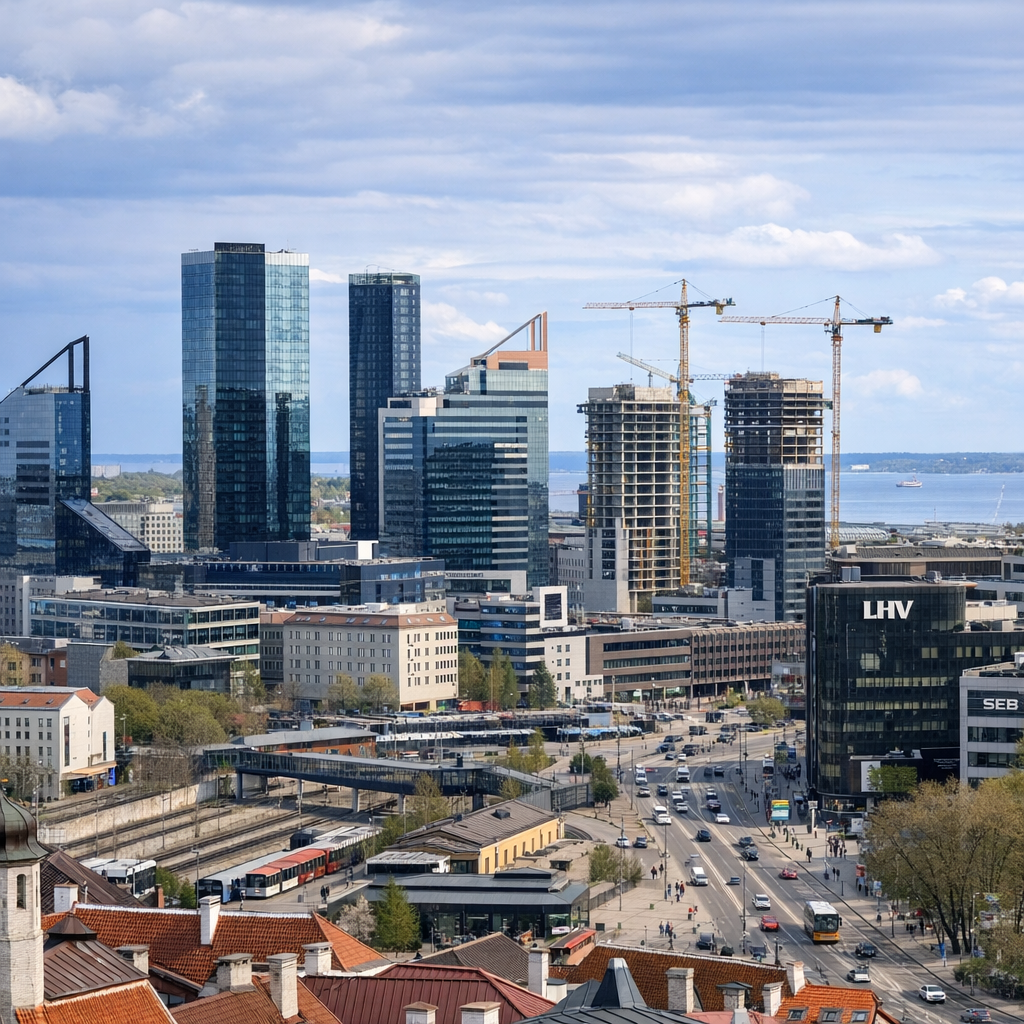
Tallinn, Estonia’s capital, has emerged as a vibrant hub for business and innovation, underpinned by a robust digital infrastructure and a favorable investment climate. This article explores the city’s key economic sectors, recent developments, and future outlook.
Information Technology and Fintech
At the forefront of Tallinn’s economy is its thriving IT and fintech sector. The city hosts leading software development companies, cybersecurity firms, and fintech innovators. Estonia’s pioneering e-government solutions, originating in Tallinn, have set a global benchmark for digital transformation. This digital prowess has attracted significant foreign investment and fostered a culture of entrepreneurship.
Startup Ecosystem
Tallinn’s startup ecosystem has demonstrated remarkable resilience and adaptability. In the first three quarters of 2024, Estonian startups surpassed €2.7 billion in revenue, marking a 10% year-over-year growth. Tallinn-based startups employed over 11,500 people by the end of Q3 2024, contributing significantly to employment and tax revenue. Notable companies like Bolt and Wise have been instrumental in this growth, with Bolt achieving a record revenue of €984 million during this period.
Real Estate and Office Market
The commercial real estate market in Tallinn has experienced mixed momentum. In the first half of 2025, the office market remained stable but segmented, with overall vacancy holding at 8.2%. Prime A-class offices performed well, while B-class landlords faced intensifying competition and slower absorption. An additional 15,000 sqm of B-class space is expected to enter the market, potentially impacting vacancy rates further.
Tourism Sector
Tourism has been a significant contributor to Tallinn’s economy. In 2024, the city welcomed over 3.4 million foreign visitors, generating €4.3 billion in turnover and supporting more than 34,000 jobs. This surge in tourism underscores the sector’s importance but also highlights the need for infrastructure expansion to accommodate growing demand.
Future Outlook
Looking ahead, Tallinn aims to enhance its position as a creative global city. The city’s strategic goals include fostering an entrepreneurial environment, promoting sustainable practices, and improving the quality of life for residents. Initiatives like the Tallinn 2035 strategy outline plans to support business development, innovation, and international collaboration.
In conclusion, Tallinn’s business landscape is characterized by dynamic growth across various sectors. The city’s commitment to digital innovation, coupled with a supportive business environment, positions it well for sustained economic development in the years to come.