

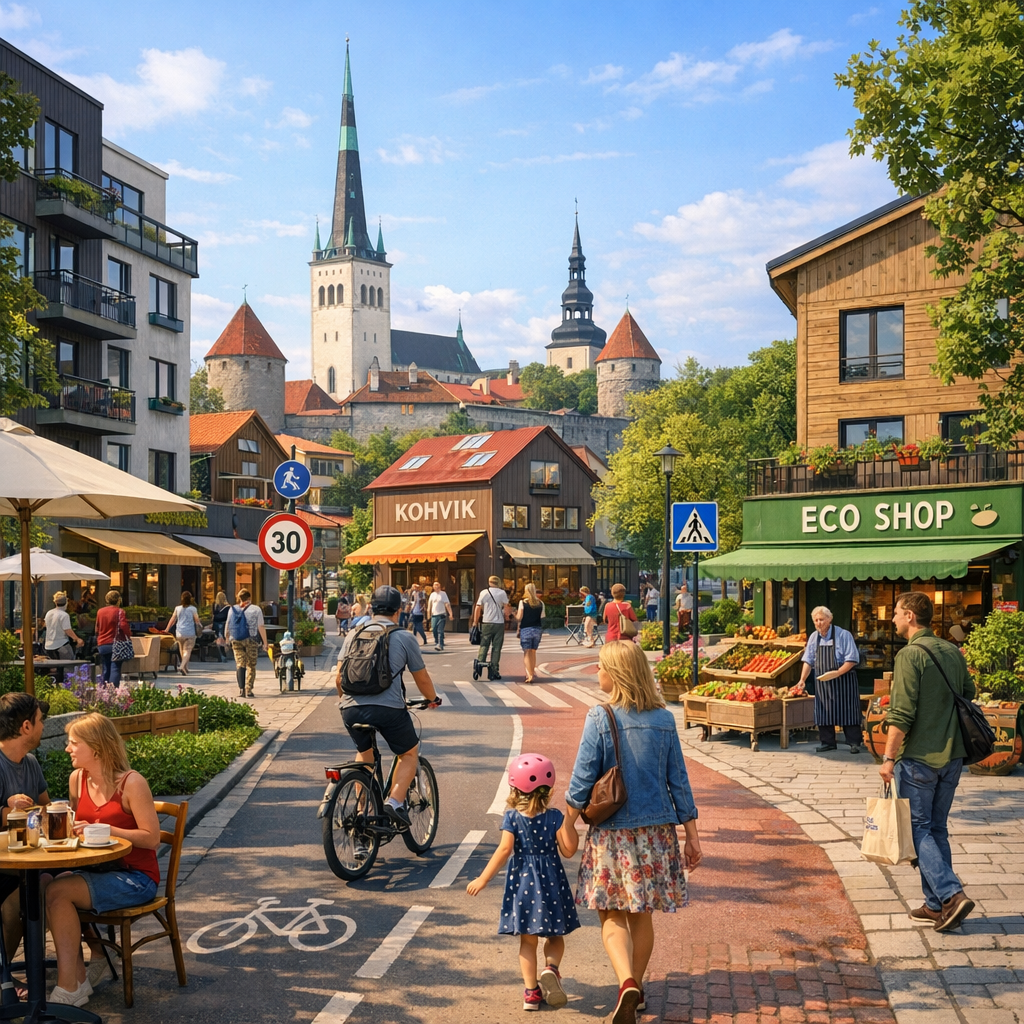
In a significant move towards sustainable urban development, Tallinn has committed to implementing the principles of the 15-minute city model by 2025. This initiative aims to ensure that essential services and amenities are accessible within a 15-minute walk or bike ride from residents’ homes, thereby enhancing the quality of life and promoting environmental sustainability.
Understanding the 15-Minute City Concept
The 15-minute city concept revolves around creating urban environments where residents can meet most of their daily needs—such as work, education, healthcare, and leisure—within a short distance from their homes. This approach reduces reliance on cars, decreases traffic congestion, and fosters healthier, more connected communities.
Tallinn’s Strategic Implementation
As part of its 2025 budget, Tallinn has emphasized the adoption of the 15-minute city principles. The city plans to conduct a comprehensive analysis of the spatial distribution of services to facilitate efficient planning for new kindergartens, schools, and senior services. This strategy aims to improve accessibility and align urban development with community needs. Source
Benefits for Residents
By embracing this model, Tallinn anticipates several benefits for its residents:
- Enhanced Accessibility: Reduced travel times to essential services.
- Environmental Sustainability: Lower carbon emissions due to decreased car usage.
- Community Well-being: Increased opportunities for social interaction and community engagement.
Challenges and Considerations
While the 15-minute city model offers numerous advantages, its implementation requires careful planning. Challenges may include ensuring equitable distribution of services across all districts and addressing the needs of diverse populations. Continuous community engagement and feedback will be crucial in overcoming these challenges.
Looking Ahead
Tallinn’s commitment to the 15-minute city model reflects a proactive approach to urban planning, aiming to create a more livable, sustainable, and inclusive environment for all residents. As the city progresses with this initiative, it will serve as a model for other urban areas seeking to enhance accessibility and quality of life through thoughtful planning.